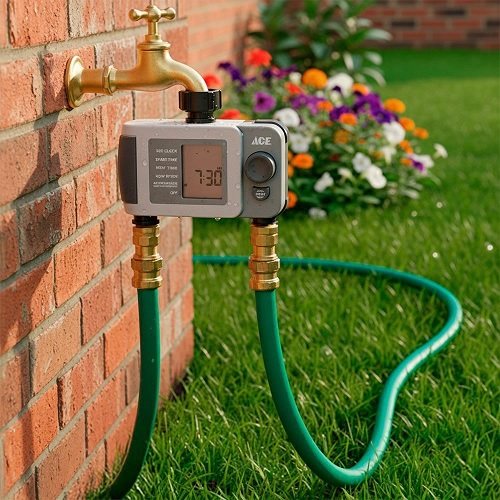
A timer controls when water flows. It does not automatically know whether each pot needs watering. Start by mapping your setup: where the water comes from, which plants share a line, and how you will check that the system is working.
Count the schedules you need
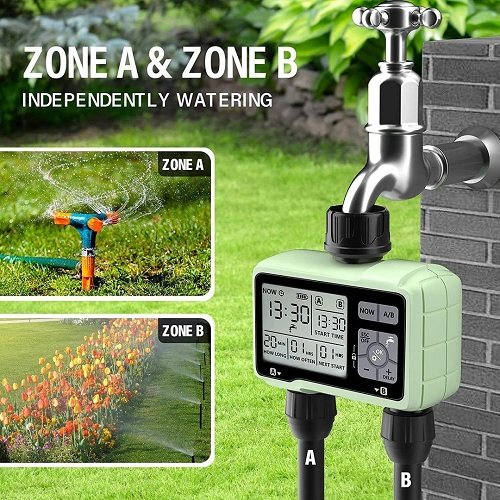
One outlet may be enough for a single watering line. Separate areas may need different schedules, but check whether a multi-outlet model actually offers independent programming. Having more outlets doesn’t necessarily mean having more control over your watering schedule.
Check compatibility first
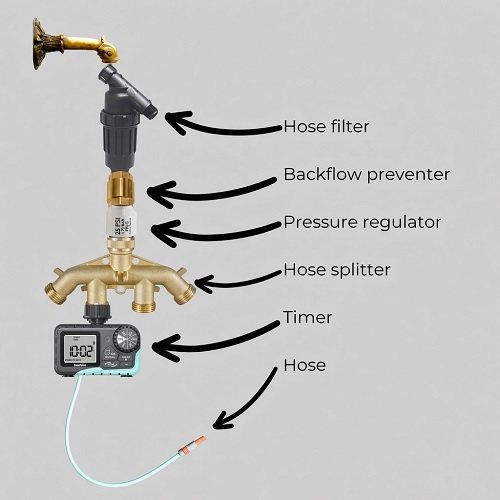
Find the manufacturer’s minimum and maximum operating pressure and confirm the connection size. A product designed for a pressurized outdoor faucet may not suit a gravity-fed rain barrel. Drip systems can also need a filter, regulator, or other components. Check the complete system instructions, including local backflow requirements.
Look at everyday controls
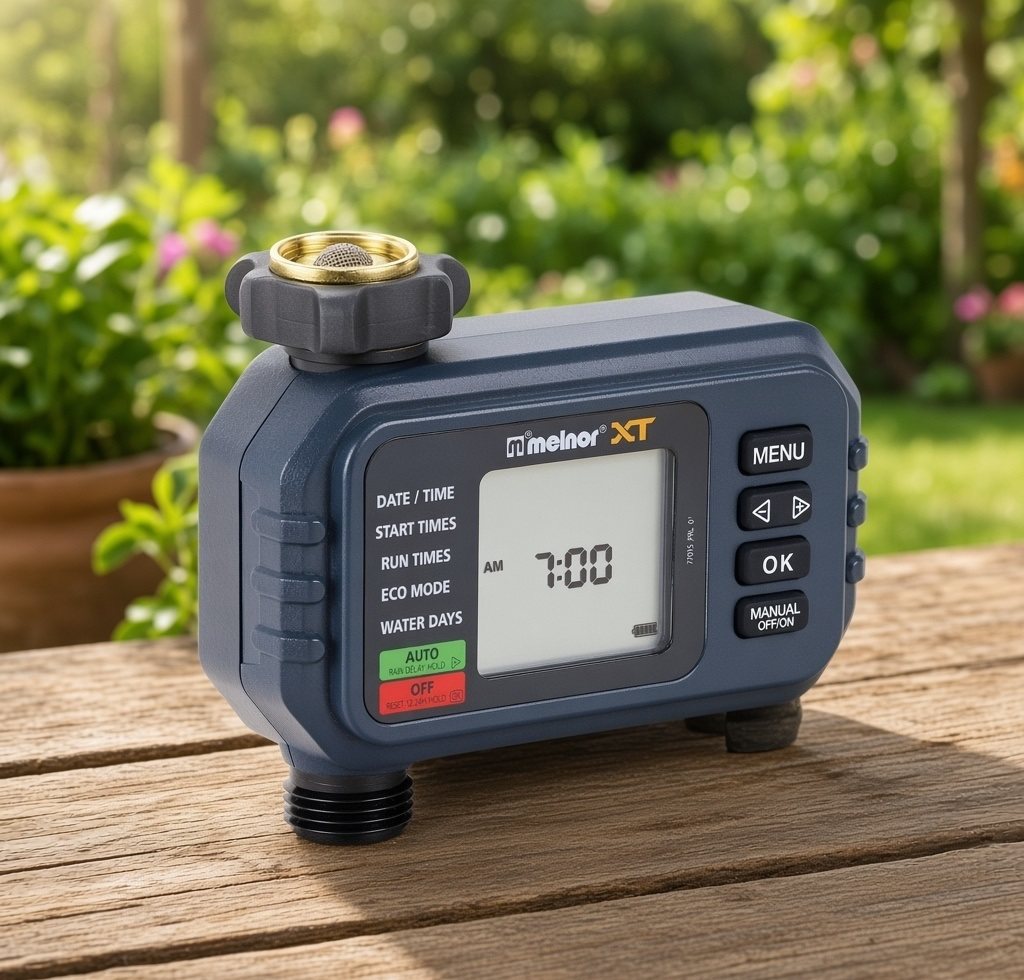
Can you water manually without deleting the program? Can you pause it after rain? Does a smart model require a hub, subscription, or reliable wireless coverage? Read the manual before paying for features that may add work to your routine.
Plan for problems
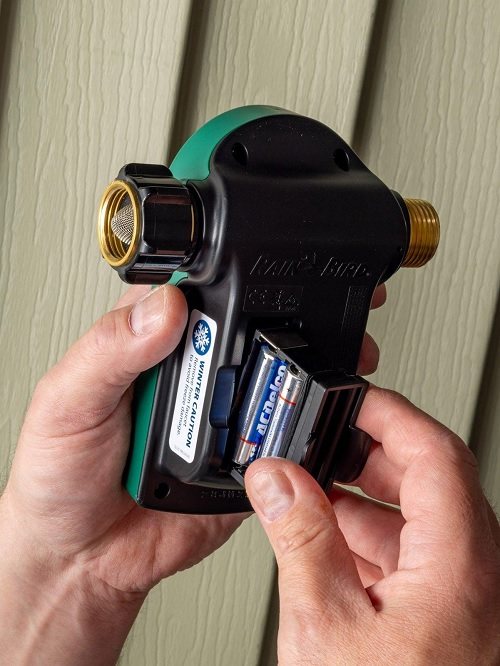
Check the documented response to a low battery, power loss, or interrupted connection. Before relying on the timer during a trip, run the full setup while you are home and inspect connections and water delivery. Arrange a check-in if a failure would leave plants unattended for a long period.
Decide what you actually need
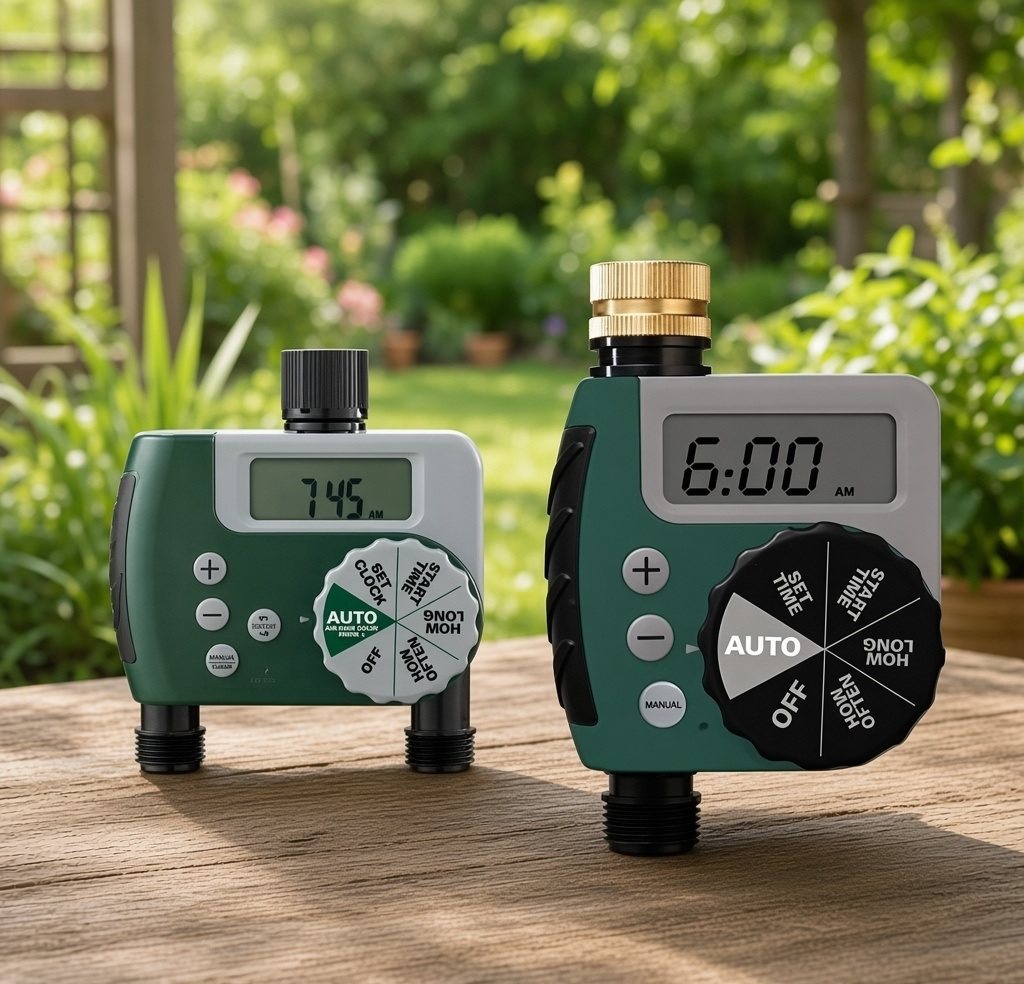
For a simple setup, a straightforward timer with the right operating range may be sufficient. More complicated layouts need a comparison of whole systems, not just timer prices. A watering wand is a manual alternative, not another type of timer, and should be compared separately.